A commissioned article on how Morocco stopped being other people's backdrop — and started telling its own stories at 2026s Cannes Film Festival.


Morocco spent decades being other people's cinema. Ouarzazate, Marrakech, Casablanca — stunning, affordable to shoot in, and endlessly useful to productions that needed desert heat and ancient walls without wanting to engage with what was actually there. Gladiator, Kingdom of Heaven, Game of Thrones. The country provided atmosphere; the stories belonged to someone else.
That's changing. Director Leïla Marrakchi returns to Cannes with La Mas Dulce. Her earlier film Marock — a portrait of a wealthy Moroccan teenager caught between personal freedom and social expectation — caused real controversy in Morocco when it came out, and quietly became a cultural touchstone for diaspora audiences who recognized themselves in it. Not the Morocco of postcards, but the one that argues with itself.
A new generation is arriving alongside her. Saïd Hamich Benlarbi is presenting new work at the Directors' Fortnight; Ismaël El Iraki is developing international co-productions around Wolfmother. Morocco isn't showing up at Cannes as scenery anymore. It's showing up with a cinematic language of its own.
Cannes has never just been about films. The Marché du Film — the festival's sprawling commercial engine — is where producers, distributors, streaming platforms and investors decide which stories travel and which don't. Morocco wants a seat at that table, and it's showing up with its own pavilion and a clear pitch for international partnerships.
It's part of a longer strategy. The country has spent years building studios, backing local production companies and creating financial incentives to develop its film sector. The ambition is explicit: Morocco no longer wants to function as a location hire for foreign productions, but as a producer and exporter of its own narratives.
It's not alone in that. Across North Africa and the Middle East, countries are investing more seriously in their presence within the international film industry. The pattern at Cannes this year reflects something broader — a region that is done being an exotic setting in other people's stories and is building the infrastructure to tell its own.
Moroccan cinema has always been political, even when it wasn't trying to be. Themes of migration, social pressure, inequality, religion and modernization have run through it for decades — filmmakers using the screen to address what couldn't always be said out loud.
One of its most uncompromising voices, Nabil Lahlou, died this week at 81. He never made mainstream films. He made honest ones — confrontational work that went after power, conformity and the contradictions at the heart of Moroccan public life. Uncomfortable in the way that necessary things often are. He never fully crossed into the mainstream, but he became one of the most influential figures in modern Moroccan cinema, and the filmmakers now making noise at Cannes grew up in his shadow.
The questions Moroccan cinema keeps returning to didn't appear from nowhere. Morocco has changed dramatically since independence — large waves of emigration to Europe, rapid modernization, ongoing and unresolved arguments about gender, religion and what it actually means to be Moroccan today. Many of those arguments still don't happen openly, inside families or in public life. Cinema becomes the space where they finally can.
For the first generation of Moroccan filmmakers after independence, the central question was: what does this country look like now? They used film to document a society in transition — to talk about freedom, inequality and change while the country was still figuring out what it was becoming.
Contemporary filmmakers are working through a different but related set of questions: what does it mean to live between identities? How do you hold family expectation and personal freedom in the same life? What does religion ask of you, and what do you actually need? What is the position of women in a society that is genuinely modernizing and genuinely resistant to that modernization at the same time? These aren't themes chosen for international appeal. They're what Moroccan life looks like from the inside.
What Moroccan Cinema? A Historical and Critical Study, 1956-2006, Sandra Gayle Carter.
Screening Morocco: Contemporary Film in a Changing Society, Valerie K. Orlando.
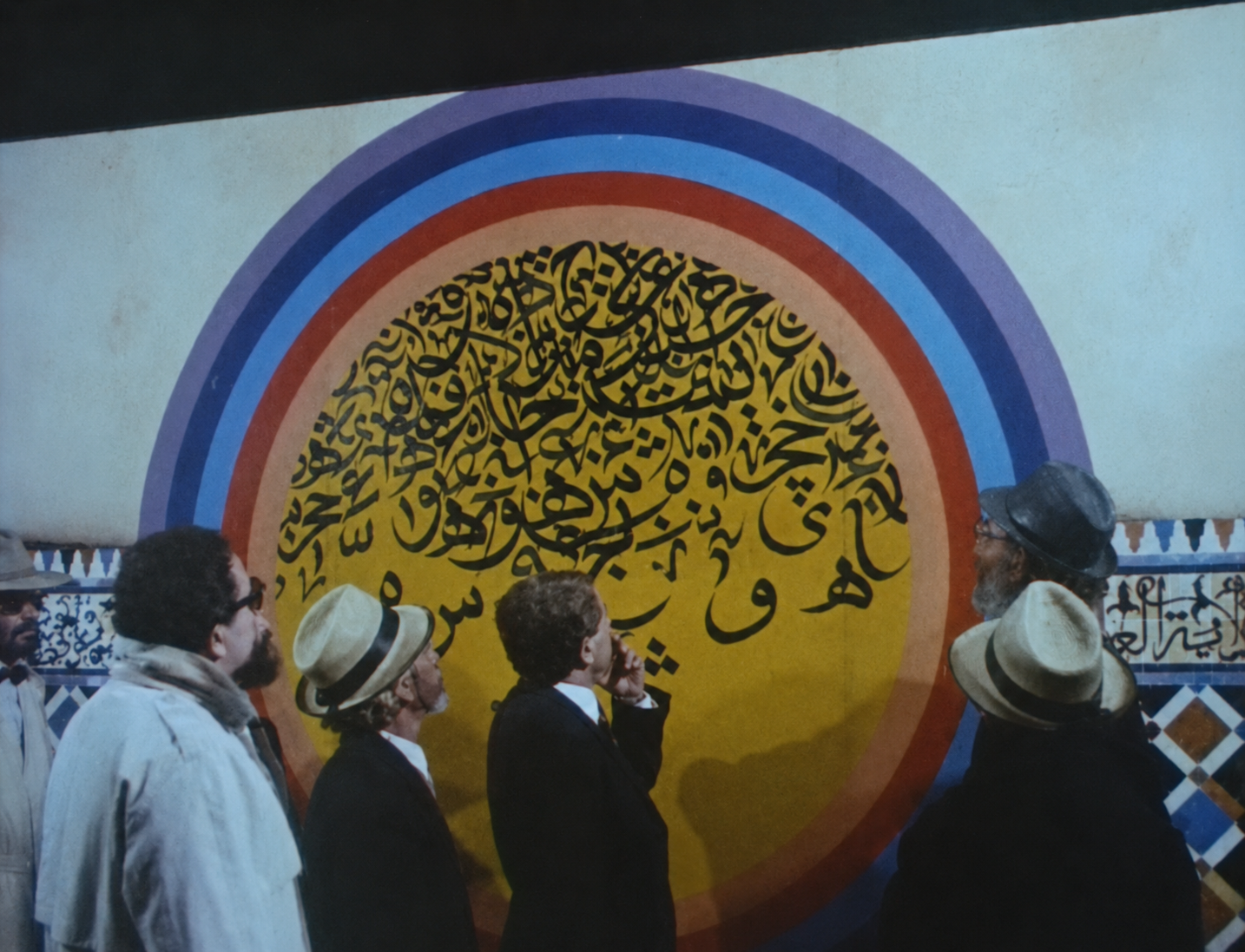
Visual source: Film still from Komany (1989), directed by Nabil Lahlou. Featuring Salim Berrada, Sofia Hadi, Hamidou, Rachid Fekkak and Mohamed Miftah. Produced by Loukous Films, Morocco. Available to watch online via link.
Commissioned article written for Atlas Nieuws, may 2026/
Article for Erfgoedstem on the recently completed renovation of the nearly 1,000-year-old Janskerk and its pioneering shared use by church and university.
Article for PAN Amsterdam on the stories, objects and collections coming together at the fair’s 39th edition.
Article for Architectenweb on Van Hoogevest Architecten’s restoration of Utrecht’s historic Magazijn De Zon, revealing 175 years of architectural layers